IPTV and OTT are two of the most popular ways to watch TV without cable. But many people still wonder: What’s the difference? Which one is better? Cutting the cord has never been easier—but choosing how to watch without cable can still feel confusing. Two of the biggest options today are IPTV and OTT, and while they might seem similar at first glance, they’re built on completely different technologies.
That’s why the experience you get from each can vary a lot. Think of IPTV as a private, VIP lane built just for your TV channels—smooth, stable, and perfect for live broadcasts. OTT, on the other hand, is your all-access streaming pass, letting you watch movies and shows anytime, anywhere, using the open internet.
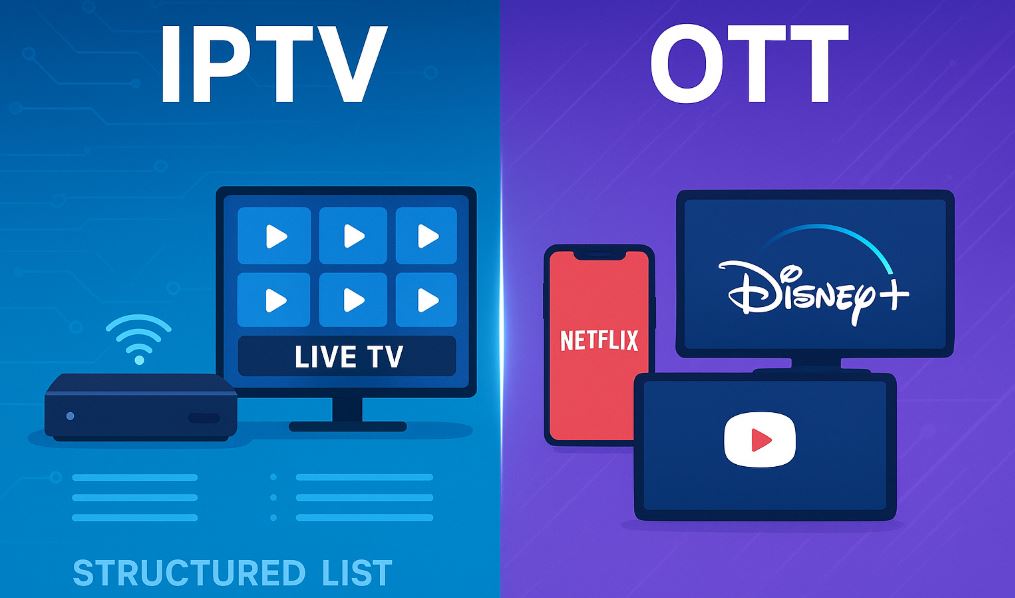
This guide explains both options in simple terms to help you decide.
What Is IPTV? (Internet Protocol Television)
IPTV delivers TV channels and videos using a private, managed network instead of the open internet.
How IPTV Works
- Often uses a set-top box or dedicated app
- Streams through a controlled IPTV server
- Offers stable and high-quality streams
Examples of IPTV
- Telecom IPTV services
- Paid IPTV subscription providers
- Local ISP-powered IPTV apps
Key Features
- Live TV channels
- Electronic Program Guide (EPG)
- Video-on-demand (VOD)
- Catch-up TV
- Stable streaming quality
What Is OTT? (Over-the-Top Streaming)
OTT delivers video using the open internet, meaning you don’t need a special network or hardware.
How OTT Works
- Streams through apps on phones, TVs, tablets, and computers
- Runs on broadband or mobile data
- No extra equipment required
Examples of OTT Platforms
- Netflix
- YouTube
- Disney+
- Amazon Prime
- Hulu
Key Features
- Large on-demand libraries
- Exclusive original content
- App-based viewing
- Affordable subscription plans
IPTV vs OTT: Key Differences
| Feature | IPTV | OTT |
|---|---|---|
| Delivery Network | Private, controlled | Public internet |
| Stability | Very stable | Depends on internet speed |
| Best For | Live TV & sports | Movies & series |
| Hardware Needed | Often yes | No |
| Popular Examples | ISP IPTV packages | Netflix, YouTube |
Quick Summary
- IPTV uses a private lane on the highway, ensuring smooth and stable streaming.
- OTT uses the public road, where speed depends on overall internet traffic.
IPTV and OTT Differences (Simple Explanation)
IPTV
- Uses special servers and sometimes hardware
- Great for live channels
- More structured and reliable
OTT
- Works on any device
- Ideal for binge-watching shows
- Needs a strong internet connection
Pros and Cons of IPTV and OTT
IPTV Pros
- Stable and reliable
- Great for live TV
- Higher quality streams
- Organized channel list
IPTV Cons
- Needs specific apps or devices
- Setup can be harder
- Depends on third-party providers
OTT Pros
- Highly flexible
- Works on mobile, TV, tablets, browsers
- Affordable
- Huge content libraries
OTT Cons
- Internet issues may cause buffering
- Limited live TV
- Content varies by region
IPTV vs OTT: Which One Is Right for You?
Choose IPTV if you want:
- Live TV channels
- Sports coverage
- Stable long-hour streaming
Choose OTT if you want:
- Movies and series
- Original content
- Flexible plans
Best Daily Use
- OTT for entertainment
- IPTV for live TV
Many people use both to get the best of each option.
Read also more related topics: IPTV VS Cable TV
Best IPTV Services for PPV Fights
Top 15 Best One-Year IPTV Subscriptions
Final Verdict
IPTV and OTT each serve different viewing styles.
- IPTV gives a traditional TV feel with reliable live channels.
- OTT gives the freedom to watch anywhere with huge content libraries.
Choose based on what matters most to you: stability or flexibility.